How I went from strongly criticizing Linux to making Fedora KDE my primary operating system, and why the experience changed the way I think about technology, privacy, and open source.
I'm 29 years old, and for more than a decade, Windows has been a part of my life.
And I wasn't just an ordinary Windows user. I was a HUGE Windows fan!
I genuinely believed Windows was the best operating system out there. Almost everyone around me was using it, most of the software I needed worked on it, and I knew my way around it pretty well.
Whenever someone talked about Linux, I would usually argue in favor of Windows. I couldn't understand why anyone would deliberately choose an operating system that seemed to make simple things complicated.
In fact, I was so strongly against Linux that, at one point, I shared the opinion of former Microsoft CEO Steve Ballmer, who famously called Linux a "cancer" in 2001.
Yes, that's how much I disliked Linux!
But something interesting happened in 2026.
After years of criticizing Linux, I started using it as my primary operating system. And surprisingly, I'm enjoying it more than Windows.
I never imagined I would be writing something like this.
My first experience with Linux
I was first introduced to Ubuntu during my college days, around nine or ten years ago.
At that time, I had already become comfortable with Windows. I knew how to install applications, configure settings, connect devices, and troubleshoot common problems.
Then I tried Ubuntu.
And honestly, I hated it.
Everything felt unnecessarily complicated.
On Windows, I was used to downloading an application, running an installer, clicking Next a few times, and getting things done.
With Ubuntu, I frequently found myself searching the internet for commands to enter into the terminal.
Sometimes, even things that I considered basic weren't straightforward.
Hardware compatibility was another problem. Connecting external devices wasn't always smooth, some drivers were missing, and getting certain hardware to work required additional effort.
Then there was software availability.
Many of the applications I was familiar with simply weren't available on Linux. There were alternatives, of course, but I wasn't particularly interested in learning a completely new application just to do something I could already do comfortably on Windows.
And gaming?
Forget about it!
Back then, gaming on Linux was nowhere near where it is today. A lot of games didn't run, and even getting supported ones to work could involve additional configuration.
So naturally, I kept asking myself one question:
Why should I go through all this trouble when Windows already does everything I need?
Looking back, I think I was also approaching Linux with the wrong expectations. I wanted it to behave exactly like Windows. Whenever something worked differently, I treated it as a problem with Linux rather than considering that there might be another way of doing things.
But at the time, I wasn't interested in thinking about it that way.
I just wanted to get back to Windows.
I never completely stopped trying Linux
Even though I disliked Linux, I have always had a habit of experimenting with technology.
I enjoy trying different operating systems, applications, and tools. Sometimes I'll revisit software that I tried years earlier, just to see how much it has improved.
So, despite my opinions about Linux, I kept giving it another chance.
Almost every year, I would install a Linux distribution, explore it for a while, and see whether anything had changed.
Most of the time, I tried Ubuntu. I also experimented with Manjaro and Kali Linux.
Now, I know Kali Linux isn't meant to be a typical desktop operating system. It's primarily designed for penetration testing and security-related work. So it wasn't exactly the right choice for judging Linux as an everyday desktop OS.
But I was experimenting, and I wanted to try different things.
Unfortunately, the result was almost always the same.
I would spend some time with Linux, run into something that frustrated me, and eventually return to Windows.
Sometimes it was an application that didn't work. Sometimes it was a hardware issue. Other times, I simply didn't feel comfortable enough to continue using it.
After repeating this for years, I had more or less accepted that Linux wasn't for me.
Or at least, that's what I thought.
Then came 2026
This year, I decided to give Linux another try.
But instead of going back to Ubuntu, I wanted to explore something different.
That's when I tried Fedora Workstation.
And I LOVED IT!
I don't know exactly how to explain it, but this experience was completely different from my previous attempts.
Fedora felt modern, polished, and surprisingly comfortable to use.
I wasn't constantly thinking about how to get back to Windows. Instead, I was actually enjoying exploring the operating system.
I started spending more time learning how Fedora works, installing applications, experimenting with development tools, and customizing my environment.
Of course, there were still things I had to figure out. Linux hasn't suddenly become an operating system where everything works perfectly.
But unlike my earlier experiences, those small difficulties didn't make me want to give up.
I was enjoying the process.
And that was something new.
Why I moved from GNOME to KDE
My first Fedora installation was Fedora Workstation, which uses the GNOME desktop environment.
GNOME is clean, modern, and relatively simple. I liked quite a few things about it.
But as I started using it more, I realized that some of the features I wanted required additional extensions.
Take clipboard history, for example.
It's a small feature, but I use it regularly. I didn't particularly like the idea of installing an extension just to get something like that.
Eventually, I tried Fedora KDE.
And I liked it even more!
KDE Plasma comes with a lot of useful features built in. It gives me much more control over the desktop without constantly relying on third-party extensions.
I can customize the panel, window behavior, keyboard shortcuts, themes, and several other things.
And the best part is that I don't have to customize everything. If I like the default behavior, I can simply leave it alone.
I know some people prefer GNOME's simplicity, and that's perfectly fine.
For me, KDE just feels more comfortable.
It's one of the things I appreciate about Linux. If I don't like a particular desktop environment, I can try another one without changing the entire operating system.
That freedom to choose is something I had never really appreciated before.
The terminal was one of the things I hated most
Here's something I find quite funny about my Linux journey.
One of the main reasons I disliked Linux during college was the command-line interface.
Today, the terminal is one of my favorite things about Linux!
Back then, I couldn't understand why anyone would prefer typing commands over clicking buttons.
Why should I memorize commands?
Why can't everything have a graphical interface?
And why should I open a terminal just to perform something that seems so simple?
Those were genuine questions I had.
But after spending more time with Linux, especially as a software developer, I started understanding why the command line is so useful.
Let me give you an example.
Think about how frequently graphical interfaces change.
If you've used Windows 7, Windows 10, and Windows 11, you've probably noticed how certain settings have moved around over the years.
Sometimes Microsoft changes a menu, renames an option, or introduces a completely different settings interface.
Android is another good example. Depending on the manufacturer, Android version, and interface, the steps for changing certain settings can be different.
Now imagine following a tutorial that was written five years ago.
It might tell you to open a particular settings window and click a button that no longer exists in the same location.
That's frustrating, isn't it?
The command line often works differently.
Many basic Unix commands have remained familiar for decades.
Commands like ls, cd, mkdir, cp, and grep are still useful today.
Of course, that doesn't mean command-line interfaces never change. Commands get updated, options are deprecated, and different distributions have different tools.
But once you learn the fundamentals, you can often reuse that knowledge for years.
And then there's automation.
Suppose I want to rename hundreds of files, search through thousands of log entries, or execute several operations repeatedly.
I could use a graphical interface and spend a considerable amount of time doing everything manually.
Or I could use a command or write a small shell script.
As a developer, this has made a real difference in my workflow.
I use the terminal for Git, Docker, package management, development, troubleshooting, and plenty of other tasks.
I still like graphical interfaces. I don't believe everything should be done through the terminal.
But I've stopped seeing the CLI as something difficult that Linux forces me to use.
Now I see it as another tool, and sometimes it's a much better tool than the GUI.
It's interesting how something I once considered a disadvantage has become one of my favorite features.
AI made me question something bigger
While Fedora changed my opinion about Linux, there was another development that influenced how I look at technology.
The rapid growth of artificial intelligence.
Before I go any further, I want to make something clear.
I'm not against AI.
I'm a software developer, and I enjoy experimenting with AI tools. I use them in my development workflow, explore different models, and find many of these technologies genuinely useful.
AI has made several things easier for me, and I believe it has enormous potential.
But watching how big technology companies are integrating AI into their products has also made me uncomfortable about certain things.
More specifically, it has made me question how much control we actually have over the software we use.
Take Windows, for example.
Microsoft has been introducing Copilot across Windows and many of its other products.
Some people love these integrations. I understand that. And there's nothing wrong with wanting AI features in your operating system.
But what if I don't want them?
What if I simply want my operating system to run my applications, manage my hardware, and let me do my work?
Why should I have to deal with features and services that I never asked for?
And this isn't just about Microsoft or Copilot.
It's something I've started noticing across the technology industry.
Companies build products that become part of our everyday lives. Over time, they introduce more services, subscriptions, recommendations, and integrations.
Sometimes those additions are genuinely useful.
But other times, it feels like we're being encouraged to consume more and more products, even when we don't really need them.
The more dependent we become on a particular ecosystem, the harder it can be to leave.
We get used to its applications, cloud services, file formats, accounts, and workflows.
Eventually, switching to something else becomes inconvenient.
And that's exactly what worries me.
I've started questioning whether we are always choosing the technology we use, or whether our choices are increasingly being shaped by the companies that build it.
It's my computer. Shouldn't I be the one deciding?
This is where Linux started making much more sense to me.
When I buy a computer, I want to feel that it's actually mine.
I want to decide what runs on it, which applications I install, which background services I need, and how the operating system behaves.
And I don't want to feel pressured into using a particular service just because the company behind my operating system wants to promote it.
Linux gives me much more room to make those decisions.
If I don't like an application, I can remove it.
If I prefer another desktop environment, I can switch.
If I want a lightweight setup with very few background services, I can build one.
If I want to customize almost every part of the desktop, that's possible too.
And if I don't want a particular service running in the background, I often have the option to disable it.
That level of control is something I've really started appreciating.
Privacy is another important part of this.
With Windows and many commercial applications, users often have to rely heavily on the vendor's privacy policies and the controls they provide.
With Linux and open-source applications, I have more opportunities to understand what's happening on my system and choose software that respects my preferences.
Now, Linux doesn't automatically guarantee privacy. Some distributions and applications collect telemetry, and open-source software can have privacy problems too.
But the ability to choose, inspect, and control more of what happens on my computer is important to me.
I don't expect every operating system to behave exactly the way I want.
I simply want more say in how my own computer works.
And honestly, I think that's a reasonable expectation.
I've also started looking at open source differently
For most of my life, I looked at software as something a company creates and people use.
A company develops an application, makes it available, and customers purchase or download it.
That was how I understood software.
Of course, as a developer, I was familiar with open-source libraries and frameworks. I've used plenty of them.
But using open-source tools and genuinely appreciating the idea behind open source are two different things.
My experience with Linux made me think more seriously about the people who build and maintain these projects.
And the more I thought about it, the more I started appreciating community-driven software.
Think about how Linux is developed.
There isn't just one person sitting somewhere deciding how every Linux system should look and behave.
The Linux kernel is developed by contributors from around the world, including volunteers and engineers employed by companies. On top of that, different communities and organizations build distributions, desktop environments, applications, and other components.
Fedora, KDE, GNOME, Debian, and countless other projects exist because people contribute their time, skills, knowledge, and resources.
Some contributors are paid to work on these projects. Others contribute because they enjoy it or because they want to improve something they use.
And the software they create can benefit millions of people.
I think that's something we often take for granted.
Open source isn't just about getting software for free
Earlier, whenever I heard someone recommending open-source software, I often associated it with one thing: free applications.
Why pay for something when a free alternative exists?
But I've come to realize that this misses the bigger picture.
Open source isn't simply about price.
It's about the ability to study how software works, modify it, share it, and build upon it.
For example, imagine a company develops an application you rely on every day.
One day, the company decides to discontinue the product.
If it's proprietary software, your options may be limited. You might have to find an alternative, migrate your data, or stop using it altogether.
With open-source software, there's at least the possibility that another developer or community can continue maintaining the project.
That doesn't mean someone will always step forward, but the option exists.
The same applies when users disagree with the direction of a project.
Depending on its license, developers can create a fork and take the software in another direction.
I find that incredibly interesting.
It means the future of a project doesn't necessarily have to depend entirely on one company.
Community-built software deserves our support
There's another side to open source that I've started thinking about.
We use open-source software everywhere.
As developers, we depend on programming languages, frameworks, libraries, databases, build tools, and countless other projects.
Just think about Git, Python, PostgreSQL, Linux, and the many packages we install in our applications.
A lot of our work would be much harder without them.
But how often do we think about the people maintaining these tools?
Some projects are backed by large organizations with dedicated development teams.
Others are maintained by a handful of people, sometimes in their spare time.
These maintainers have to review contributions, fix bugs, handle security reports, update documentation, and keep everything working.
And sometimes, thousands of developers depend on software maintained by just one or two people.
That's why I believe we should support open-source communities whenever possible.
And no, that doesn't mean everyone has to become a contributor who writes code.
You can help improve documentation. You can report bugs properly. You can help someone who's struggling with a tool. You can donate to projects you depend on.
Even recommending a useful open-source application can help more people discover it.
Every small contribution matters.
I also understand that open source isn't automatically better than proprietary software.
An open-source project can be badly maintained, insecure, or difficult to use. Commercial software can be excellent, and there's nothing wrong with companies earning money from products they build.
In fact, many important open-source projects receive significant contributions and funding from commercial companies.
I'm not against that.
What I appreciate is the idea that useful technology can be developed openly, with people from different backgrounds working together.
And I think it's worth supporting that idea.
Does this mean I've completely stopped using Windows?
Not really.
I still use Windows occasionally, and I don't see anything wrong with that.
As a content creator, I work with video-editing software. I've used Adobe Premiere Pro, and Adobe's applications are still an important part of many creative workflows.
There are video editors available for Linux, including DaVinci Resolve and several open-source alternatives.
But that doesn't mean switching is always easy.
Depending on the software, there can be issues with codecs, plugins, hardware acceleration, or compatibility with existing projects.
For professional multimedia work, those things matter.
So I still use Windows when I need applications that don't work well on Linux.
Gaming is another reason.
I still play games occasionally, although gaming isn't a major part of my daily routine anymore.
Linux gaming has improved enormously thanks to technologies like Proton. Many games that previously required Windows can now run on Linux.
But some games, particularly those with certain anti-cheat systems, still don't work.
And I'm not going to spend hours trying to make a game run when I can simply boot into Windows and play it.
So yes, Windows is still there when I need it.
But there's a big difference now.
Earlier, Windows was my default operating system, and Linux was something I experimented with occasionally.
Today, it's the other way around.
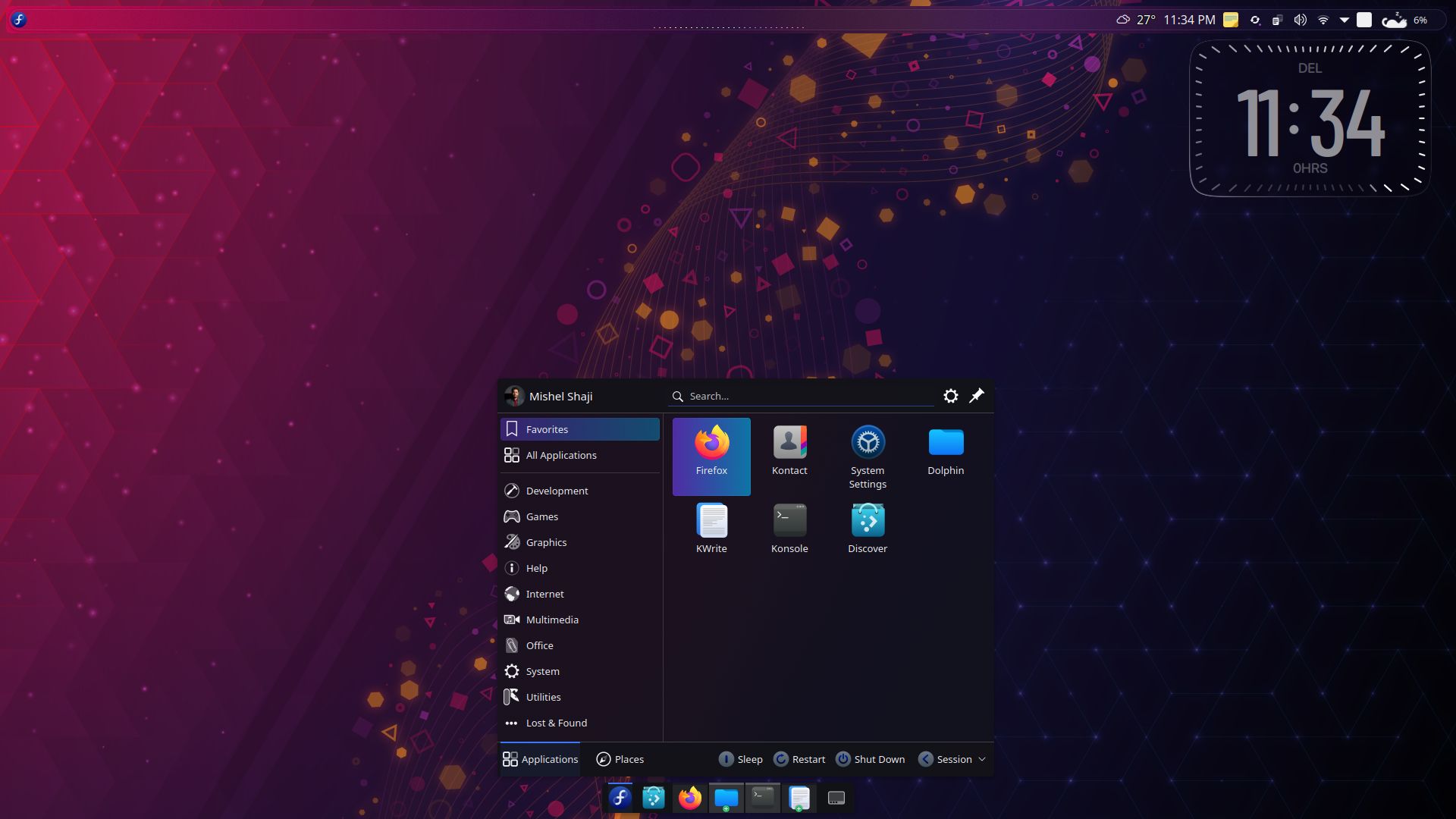
Fedora KDE is my primary operating system. Windows is something I use when I have a specific reason to use it.
And for someone who spent years advocating against Linux, that's quite a change!
I'm not saying everyone should switch to Linux
One thing I want to clarify is that I'm not writing this to convince everyone to abandon Windows.
Different people have different requirements.
If your work depends on software that only runs on Windows, then Windows might be the right choice for you.
If you're comfortable with macOS and it fits your workflow, that's perfectly fine too.
And if Linux works for you, great!
I'm also not claiming that Linux is perfect.
I've faced problems with Linux, and I'm sure I'll face more in the future. There are still areas where hardware support, commercial software availability, and gaming compatibility need improvement.
Even package management can occasionally be frustrating, depending on the distribution and the software you're trying to install.
But I've stopped expecting every operating system to work exactly like Windows.
That's probably one of the biggest differences between my earlier attempts and my experience today.
Instead of immediately dismissing something because it works differently, I try to understand why it works that way.
Sometimes I discover a better approach.
Sometimes I don't.
And that's okay.
What matters to me now is having the freedom to choose the tools that work best for my needs.
The biggest lesson I learned in 2026
When I think about everything that happened, what surprises me most isn't that I switched to Linux.
It's how certain I used to be that Linux was terrible.
I had formed a strong opinion based on my experience many years ago, and I continued carrying that opinion for a long time.
Even though I kept trying Linux occasionally, I usually approached it expecting to be disappointed.
But things change.
Linux has improved. Hardware support has improved. Software availability has improved. Gaming has come a long way.
And I've changed too.
As a developer, I now understand and appreciate tools that I found frustrating during college.
My priorities are different. I care more about control over my computing environment, privacy, customization, and the ability to choose which technologies I depend on.
Those weren't things I thought much about when I first started using Windows.
Perhaps Linux wasn't the right operating system for me ten years ago.
But that doesn't mean it couldn't become the right choice later.
And I think this applies to much more than operating systems.
Maybe there's a programming language you tried years ago and didn't like.
Maybe there's an application you dismissed because its interface was confusing.
Maybe there's a technology you decided wasn't worth learning.
Have you tried it again recently?
Because there's a good chance it has changed.
And there's also a chance that you've changed enough to appreciate it differently.
I think we sometimes become too attached to our opinions, especially when we've defended them for years.
Changing our minds can feel like admitting we were wrong.
But I don't see it that way anymore.
If new experiences give me a reason to reconsider something, why shouldn't I?
I was a huge Windows fan. I strongly criticized Linux. I disliked the terminal. I believed Linux would never become my primary operating system.
Today, I use Fedora KDE almost every day, enjoy working in the terminal, and have developed a much greater appreciation for open-source software and the communities behind it.
And I never imagined I'd say that!
The biggest lesson? Never stop revisiting things you've dismissed in the past. Technology evolves, and so should your opinions.
I'm still learning, and I don't know what operating system I'll prefer five or ten years from now.
Maybe I'll continue using Fedora. Maybe I'll switch to another Linux distribution. Maybe something entirely different will come along.
I don't think I need to decide that today.
For now, I'm simply enjoying Linux.
And I'm glad I gave it another chance. 🐧